2026
 |
73.-
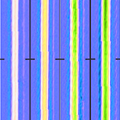
Monitoring Liquid Concentration Changes in Nanofluidic Channels using Cross-Grating Wavefront Microscopy L. Wilske, B. Marthy, P. Teluchina-Appadu, J. Fritzsche, G. Baffou,* C. Langhammer* ACS Nano , accepted (2026) |

 |
72.-
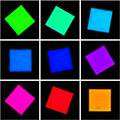
Single-shot polarization imaging of vectorial metasurfaces using cross-grating wavefront microscopy J. Flamant, B. Marthy, K. Zangeneh Kamali, N. Ullberg, G. Demesy, P. Ferrand, M. Käll, G. Baffou* ACS Nano , accepted (2026) |
 |
71.-
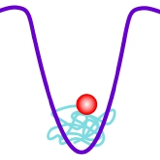
Single Nanoparticle Dynamics in Opto-Thermal Tweezers: Unveiling the Temporal Resolution of Depletion Force Trapping J. Chen, R. Talla Kontchou, S. Rai, G. Baffou, S. Blaize, Q. Jiang, and J. Wenger* ACS Nano 20, 18511-18520 (2026) |
2025
 |
70.-
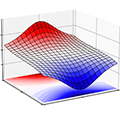
Optimizing reaction and transport fluxes in temperature gradient-driven chemical reaction-diffusion systems M. Loukili, L. Jullien, G. Baffou, R. Plasson* Phys. Rev. E 111, 034209 (2025) |
 |
69.-
Surface modifications induced by the laser ablation of surface-bound microparticles at low to moderate fluence level in the ultraviolet Alexandre Beaudier, Baptiste Marthy, Charles Bouyer, Romain Parreault, Guillaume Baffou, Jerome Neauport* Optics Express 33, 6359 (2025) |

2024
 |
68.-
Quantitative phase microscopies: accuracy comparison P. C. Chaumet, P. Bon, G. Maire, A. Sentenac, G. Baffou* Light: Science and Applications 13, 288 (2024) |
 |
67.-
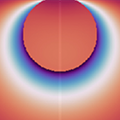
Single-shot quantitative phase-fluorescence imaging using cross-grating wavefront microscopy B. Marthy, M. Bénéfice, G. Baffou* Scientific Report 14, 2142 (2024) |
2023
 |
66.-
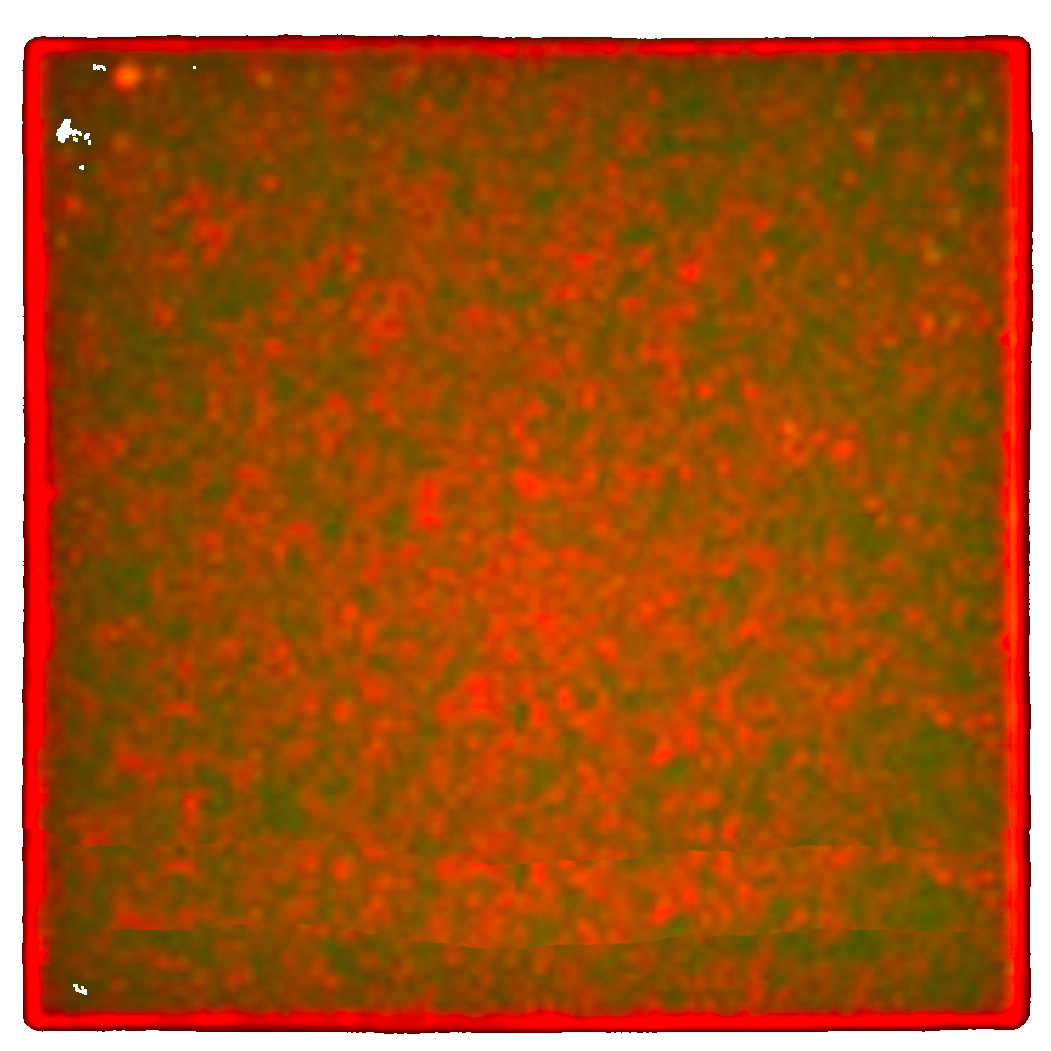
Quantitative Microscale Thermometry in Droplets Loaded with Gold Nanoparticles L. Sixdenier,* G. Baffou, C. Tribet, E. Marie* Journal of Physical Chemistry Letters 14, 11200-11207 (2023) |
 |
65.-
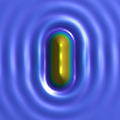
Anti Stokes Thermometry of Plasmonic Nanoparticle Arrays S. Ezendam, L. Nan, I. L. Violi, S. A. Maier, E. Cortés,* G. Baffou,* J. Gargiulo* Advanced Optical Materials , 2301496 (2023) |
 |
64.-
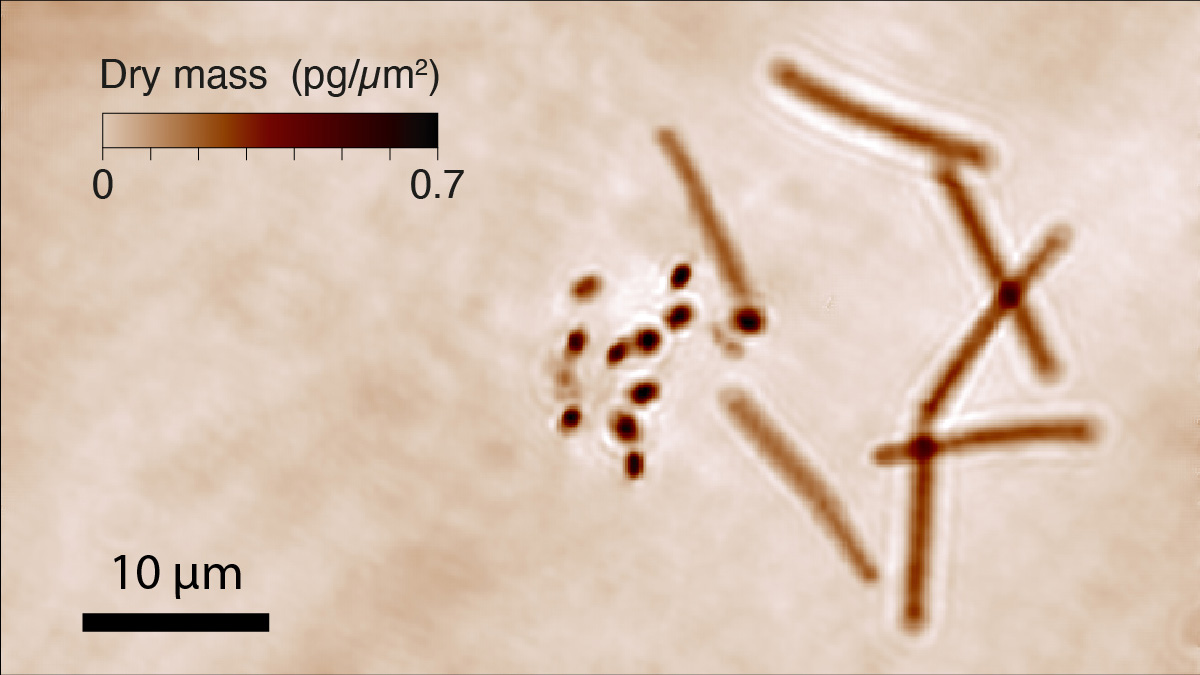
Dry mass photometry of single bacteria using quantitative wavefront microscopy M. Bénéfice, A. Gorlas, B. Marthy, V. Da Cunha, P. Forterre, A. Sentenac, P. C. Chaumet, G. Baffou* Biophysical Journal 122, 3159-3172 (2023) |
 |
63.-
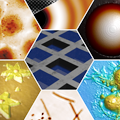
Uniform Huygens Metasurfaces with Postfabrication Phase Pattern
Recording Functionality E. Mikheeva, R. Colom, P. Genevet*, F. Bedu, I. Ozerov, S. Khadir, G. Baffou, R. Abdeddaim, S. Enoch, and J. Lumeau* ACS Photonics 10, 1538-1546 (2023) |
 |
62.-
Wavefront microscopy using quadriwave lateral shearing interferometry: from bioimaging to nanophotonics G. Baffou ACS Photonics 10, 322-339 (2023) |
 Common cameras are only sensitive to the intensity of light, discarding an essential feature of a light wave: its phase profile or, equivalently, its wavefront profile. This Review focuses on a rising wavefront imaging technique called quadriwave lateral shearing interferometry (QLSI), based on the simple use of a 2-dimensional diffraction grating, aka a cross-grating, in front of a regular camera. We detail the working principle of QLSI and its implementation on an optical microscope. We highlight its microscopy applications in bioimaging and nanophotonics, in particular for the characterization of living cells, nanoparticles, 2D materials, metasurfaces, microscale temperature gradients, and surface topography. Finally, we draw a critical comparison of QLSI with current quantitative phase microscopy techniques, namely, digital holography microscopy (DHM), spatial light interference microscopy (SLIM), and diffraction phase microscopy (DPM).
2022
 |
61.-
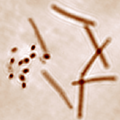
Biomass measurements of single neurites
in vitro using optical wavefront microscopy L. Durdevic, A. Resano Gines, A. Roueff, G. Blivet, G. Baffou* Biomedical Optics Express 13, 6550-6560 (2022) ☆ Journal cover |
 |
60.-
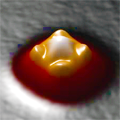
Life at high temperature observed in vitro upon laser heating of gold nanoparticles C. Molinaro, M. Bénéfice, A. Gorlas, V. Da Cunha, H. M. L. Robert, R. Catchpole, L. Gallais, P. Forterre, G. Baffou* Nature Communications 13, 5342 (2022) |
 Thermophiles are microorganisms that thrive at high temperature. Studying them can provide valuable information on how life has adapted to extreme conditions. However, high temperature conditions are difficult to achieve on conventional optical microscopes. Some home-made solutions have been proposed, all based on local resistive electric heating, but no simple commercial solution exists. In this article, we introduce the concept of microscale laser heating over the field of view of a microscope to achieve high temperature for the study of thermophiles, while maintaining the user environment in soft conditions. Microscale heating with moderate laser intensities is achieved using a substrate covered with gold nanoparticles, as biocompatible, efficient light absorbers. The influences of possible microscale fluid convection, cell confinement and centrifugal thermophoretic motion are discussed. The method is demonstrated with two species: (i) Geobacillus stearothermophilus, a motile thermophilic bacterium thriving around 65°C, which we observed to germinate, grow and swim upon microscale heating and (ii) Sulfolobus shibatae, a hyperthermophilic archaeon living at the optimal temperature of 80°C. This work opens the path toward simple and safe observation of thermophilic microorganisms using current and accessible microscopy tools.
 |
59.-
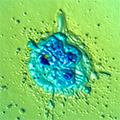
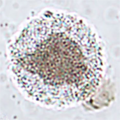
Cross-grating phase microscopy (CGM): In-silico experiment (insilex) algorithm, noise and accuracy B. Marthy, G. Baffou* Optics Communications 521, 128577 (2022) |
 |
58.-
Optically-assisted thermophoretic
reversible assembly of colloidal
particles and E. coli using graphene
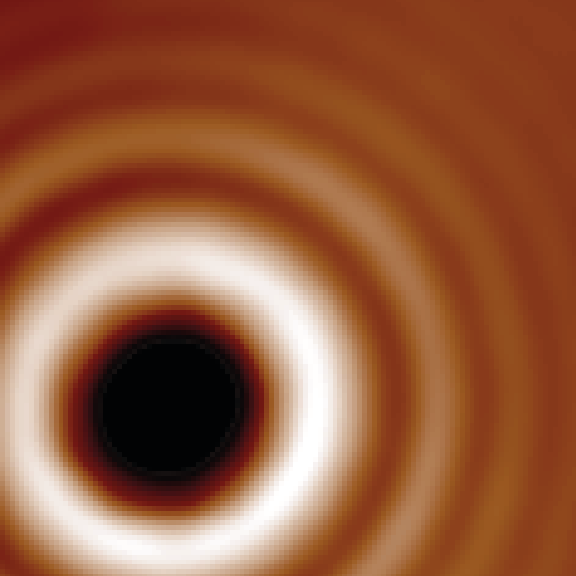
oxide microstructures J. Puthenveetil Joby, S. Das, P. Pinapati, B. Rogez, G. Baffou, D. K. Tiwari, S. Cherukulappurath Scientific Reports 12, 3657 (2022) |
 |
57.-
Cross-grating phase microscopy for nanophotonics G. Baffou arXiv , 2112.14924 (2022) |
2021
 |
56.-
Thermoplasmonics of metal layers and nanoholes B. Rogez,* Z. Marmri, F. Thibaudau, G. Baffou* APL Photonics 6, 101101 (2021) |
 |
55.-
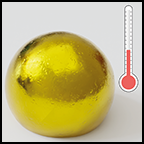
Microscale Thermophoresis in Liquids Induced by Plasmonic Heating and Characterized by Phase and Fluorescence Microscopies S. Shakib, B. Rogez, S. Khadir, J. Polleux, A. Würger, G. Baffou* J Phys Chem C 125, 21533-21542 (2021) |
 |
54.-
Anti-Stokes Thermometry in Nanoplasmonics G. Baffou ACS Nano 15, 5785-5792 (2021) |
 |
53.-
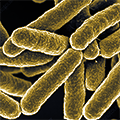
Quantitative phase microscopy using quadriwave lateral shearing interferometry (QLSI): principle, terminology, algorithm and grating shadow description. G. Baffou J. Phys. D: Appl. Phys. 54, 294002 (2021) |
 |
52.-
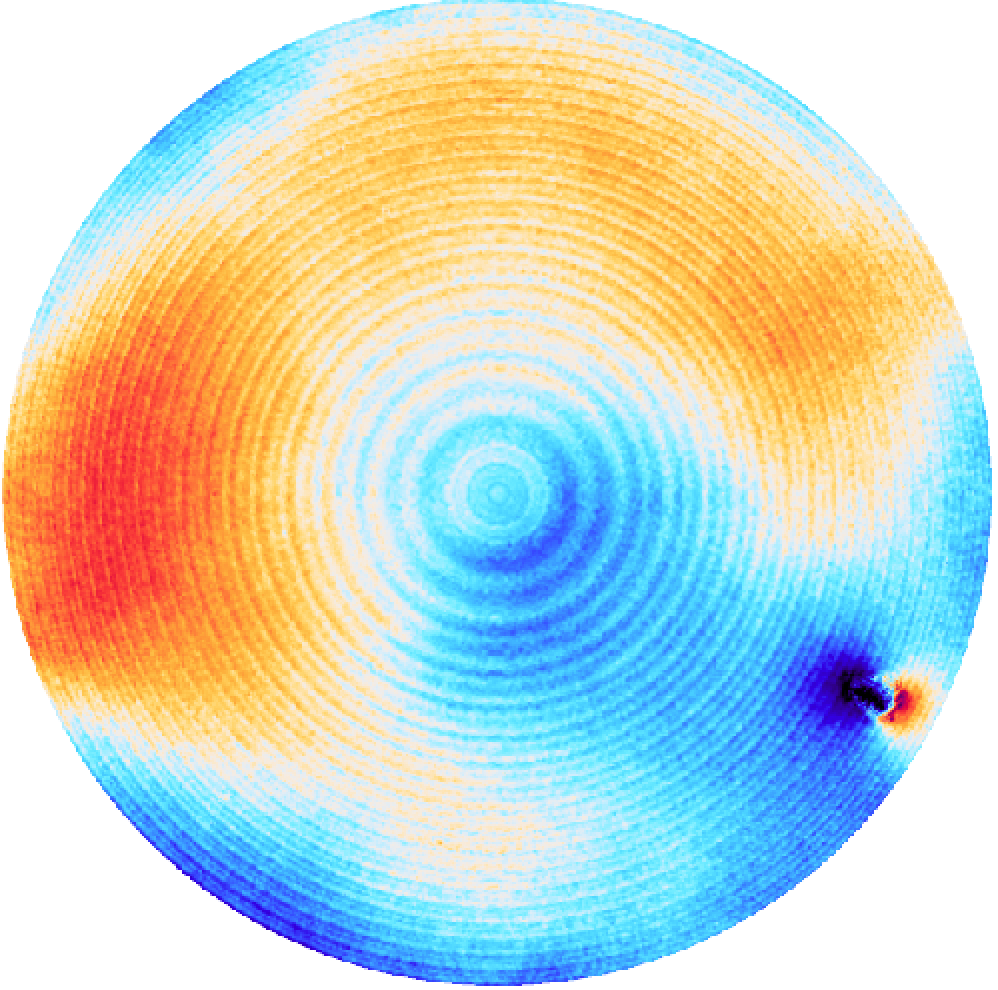
Are bacteria claustrophobic? The problem of micrometric spatial confinement for the culture of micro-organisms C. Molinaro,* V. Da Cunha, A. Gorlas, F. Iv, L. Gallais, R. Catchpole, P. Forterre, G. Baffou* RSC Advances 11, 12500-12506 (2021) |
 |
51.-
Metasurface optical characterization using quadriwave lateral shearing interferometry S. Khadir,* D. Andrén, R. Verre, Q. Song, S. Monneret, P. Genevet, M. Käll, G. Baffou* ACS Photonics 8, 603-613 (2021) |
2020
 |
50.-
Quantifying the Role of the Surfactant and the Thermophoretic Force in Plasmonic Nano-Optical Trapping Q. Jiang, B. Rogez, J. B. Claude, G. Baffou, J. Wenger* Nano Letters 12, 8811-8817 (2020) |
 |
49.-
Applications and challenges of thermoplasmonics G. Baffou,* F. Cichos,* R. Quidant* Nature Materials 19, 946-958 (2020) |
 |
48.-
Simple experimental procedures to distinguish photothermal from hot-carrier processes in plasmonics G. Baffou,* I. Bordacchini, A. Baldi, R. Quidant Light: Science and Applications 9, 108 (2020) ☆ESI highly cited paper in January 2023 |
 |
47.-
Optimal architecture for diamond-based wide-field thermal imaging R. Tanos, W. Akhtar, S. Monneret, F. Favaro de Oliveira, G. Seniutinas, M. Munsch, P. Maletinsky, L. le Gratiet, I. Sagnes, A. Dréau, C. Gergely, V. Jacques, G. Baffou, I. Robert-Philip AIP Advances 10, 025027 (2020) |
 |
46.-
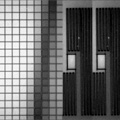
Full optical characterization of single nanoparticles using quantitative phase imaging S. Khadir,* Daniel Andrén, P. C. Chaumet, S. Monneret, N. Bonod, M. Käll, A. Sentenac, G. Baffou* Optica 7, 243-248 (2020) ☆ Journal cover |
 This article introduces a procedure aimed to quantitatively measure the optical properties of nanoparticles, namely the complex polarizability and the extinction, scattering and absorption cross sections, simultaneously. The method is based on the processing of intensity and wavefront images (PIWI) of a light beam illuminating the nanoparticle of interest. Intensity and wavefront measurements are carried out using quadriwave lateral shearing interferometry, a quantitative phase imaging technique with high spatial resolution and sensitivity. The method does not require any pre-knowledge on the particle, and involves a single interferogram image acquisition. The full determination of the actual optical properties of nanoparticles is of particular interest in plasmonics and nanophotonics for the active search and characterization of new materials, e.g., aimed to replace noble metals in future applications of nanoplasmonics with less-lossy or refractory materials.
 |
45.-
Adhesion Layer Influence on Controlling the Local Temperature in Plasmonic Gold Nanoholes Q. Jiang, B. Rogez, J.-B. Claude, A. Moreau, J. Lumeau, G. Baffou, J. Wenger* Nanoscale 12, 2524-2531 (2020) |
2019
 |
44.-
Temperature Measurement in Plasmonic Nanoapertures used for Optical Trapping Q. Jiang, B. Rogez, J.-B. Claude, G. Baffou, J. Wenger* ACS Photonics 6, 1763-1773 (2019) |
 |
43.-
Microscale Temperature Shaping Using Spatial Light Modulation on Gold Nanoparticles L. Durdevic, H. M. L. Robert, B. Wattellier, S. Monneret, G. Baffou* Scientific Report 9, 4644 (2019) |
 |
42.-
Quantitative model of the image of a radiating dipole through a microscope S. Khadir,* P. Chaumet, G. Baffou, A. Sentenac Journal of the Optical Society of America A 36, 478-484 (2019) |
2018
 |
41.-
Photothermal control of heat-shock protein expression at the single cell level H. M. L. Robert,* J. Savatier, S. Vial, J. Verghese, B. Wattelier, H. Rigneault, S. Monneret, J. Polleux,* and G. Baffou* Small 14, 1801910 (2018) |
 |
40.-
GOLD NANOPARTICLES as nanosources of heat G. Baffou Photoniques 2, 42-47 (2018) |
2017
 |
39.-
Optical imaging and characterization of graphene and other 2D materials using quantitative phase microscopy S. Khadir,* P. Bon, D. Vignaud, E. Galopin, N. McEvoy, D. McCloskey, S. Monneret, G. Baffou* ACS Photonics 4, 3130-3139 (2017) |
 |
38.-
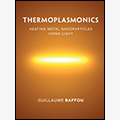
Thermoplasmonics G. Baffou Cambridge University Press , 320 pp. (2017) ☆ Highlighted in Nature Photonics |
 |
37.-
Isosbestic Thermoplasmonic Nanostructures K. Metwally, S. Mensah, G. Baffou* ACS Photonics 4, 1544-1551 (2017) |
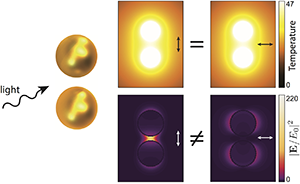 This article introduces the concept of photothermal isosbesticity in plasmonics. In analogy with absorbance spectroscopy, this concept designates nanostructures that feature an invariance of their temperature increase upon varying the illumination polarization angle. We show that non-trivial i.e. non-centrosymmetric) isosbestic nanostructures exist, and prove valuable when the optical near-field intensity remains, on the contrary, highly dependent on the illumination polarization. The concept is introduced with the case of a sphere-dimer, where the conditions for isosbesticity can be derived analytically. The cases of a spheroid and a disc-dimer are also studied in order to draw a general theory and explain how isosbesticity conditions can be obtained from the visible to the infrared range. Non-trivial isosbestic plasmonic nanostructures stand for powerful systems to elucidate the origin (thermal or optical) of mechanisms involved in plasmonics-assisted nanochemistry, liquid-gas phase transition or heat-assisted magnetic recording.
2016
 |
36.-
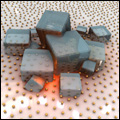
Plasmonic efficiencies of nanoparticles made of metal nitrides (TiN, ZrN) compared with gold A. Lalisse, G. Tessier, J. Plain, G. Baffou* Scientific Reports 6, 38647 (2016) |
 |
35.-
Light-Assisted Solvothermal Chemistry Using Plasmonic Nanoparticles H. M. L. Robert,* F. Kundrat, E. Bermudez-Urena, H. Rigneault, S. Monneret, R. Quidant, J. Polleux, G. Baffou* ACS Omega 1, 2-8 (2016) ☆ Highlighted on the CNRS website |
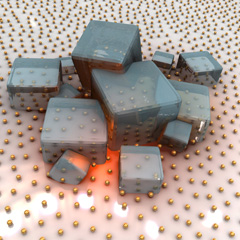 Solvothermal synthesis, denoting chemical reactions occurring in metastable liquids above their boiling point, normally requires the use of a sealed autoclave under pressure, to prevent the solvent from boiling. This work introduces an experimental approach that enables solvothermal synthesis at ambient pressure, in an open reaction medium. The approach is based on the use of gold nanoparticles deposited on a glass substrate and acting as photothermal sources. To illustrate the approach, the selected hydrothermal reaction involves the formation of indium hydroxide microcrystals favored at 200°C in liquid water. In addition to demonstrating the principle, the benefits and the specific characteristics of such an approach are investigated, in particular the much faster reaction rate, the achievable spatial and time scales, the effect of microscale temperature gradients, the effect of the size of the heated area and the effect of thermal-induced microscale fluid convection. This technique is general and could be used to spatially control the deposition of virtually any material for which a solvothermal synthesis exists.
2015
 |
34.-
Fluence Threshold for Photothermal Bubble Generation Using Plasmonic Nanoparticles K. Metwally, S. Mensah, G. Baffou* Journal of Physical Chemistry C 119, 28586-28596 (2015) |
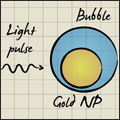
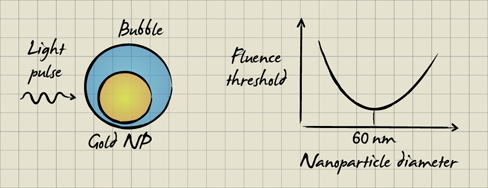 Under nano- to femtosecond pulsed illumination at their plasmonic resonance wavelength, metal nanoparticles efficiently absorb the incident light energy that is subsequently converted into heat. In a liquid environment, with sufficiently high pulse fluences (light energy per unit area), this heat generation may result in the local formation of a transient nanobubble. This phenomenon has been the subject of a decade of investigations and is at the basis of numerous applications from cancer therapy to photoacoutic imaging. The aim of this article is to clarify the question of the fluence threshold required for bubble formation. Using a Runge-Kutta-4 numerical algorithm modeling the heat diffusion around a spherical gold nanoparticle, we numerically investigate the influence of the nanoparticle diameter, pulse duration (from the femto- to the nanosecond range), wavelength and Kapitza resistivity in order to explain the observations reported in the literature.
 |
33.-
Quantifying the Efficiency of Plasmonic Materials for Near-Field Enhancement and Photothermal Conversion A. Lalisse, G. Tessier, J. Plain, G. Baffou* Journal of Physical Chemistry C 119, 25518-25528 (2015) |
 |
32.-
Shaping and Patterning Gold Nanoparticles via Micelle Templated Photochemistry F. Kundrat, G. Baffou, J. Polleux* Nanoscale 7, 15814-15821 (2015) |
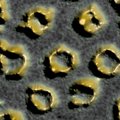
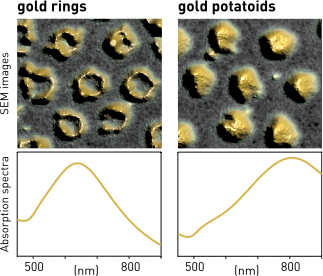 Shaping and positioning noble metal nanostructures are essential processes that still require laborious and
sophisticated techniques to fabricate functional plasmonic interfaces. The present study reports a simple
photochemical approach compatible with micellar nanolithography and photolithography that enables
the growth, arrangement and shaping of gold nanoparticles with tuneable plasmonic resonances on glass
substrates. Ultraviolet illumination of surfaces coated with gold-loaded micelles leads to the formation of
gold nanoparticles with micro/nanometric spatial resolution without requiring any photosensitizers or photoresists. Depending on the extra-micellar chemical environment and the illumination wavelength, block copolymer micelles act as reactive and light-responsive templates, which enable to grow gold deformed nanoparticles (potatoids) and nanorings. Optical characterization reveals that arrays of indivi-
dual potatoids and rings feature a localized plasmon resonance around 600 and 800 nm, respectively,
enhanced photothermal properties and high temperature sustainability, making them ideal platforms for
future developments in nanochemistry and biomolecular manipulation controlled by near-infrared-
induced heat.
Shaping and positioning noble metal nanostructures are essential processes that still require laborious and
sophisticated techniques to fabricate functional plasmonic interfaces. The present study reports a simple
photochemical approach compatible with micellar nanolithography and photolithography that enables
the growth, arrangement and shaping of gold nanoparticles with tuneable plasmonic resonances on glass
substrates. Ultraviolet illumination of surfaces coated with gold-loaded micelles leads to the formation of
gold nanoparticles with micro/nanometric spatial resolution without requiring any photosensitizers or photoresists. Depending on the extra-micellar chemical environment and the illumination wavelength, block copolymer micelles act as reactive and light-responsive templates, which enable to grow gold deformed nanoparticles (potatoids) and nanorings. Optical characterization reveals that arrays of indivi-
dual potatoids and rings feature a localized plasmon resonance around 600 and 800 nm, respectively,
enhanced photothermal properties and high temperature sustainability, making them ideal platforms for
future developments in nanochemistry and biomolecular manipulation controlled by near-infrared-
induced heat.
 |
31.-
Reply to: "Validating subcellular thermal changes revealed by fluorescent thermosensors" and "The 10^5 gap issue between calculation and measurement in single-cell thermometry" G. Baffou,* H. Rigneault, D. Marguet, L. Jullien Nature Methods 12, 803 (2015) |
 |
30.-
Quantitative study of the photothermal properties of metallic nanowire networks A. P. Bell, J. A. Fairfield, E. K. McCarthy, S. Mills, J. J. Boland, G. Baffou, D. McCloskey* ACS Nano 9, 5551-5558 (2015) |
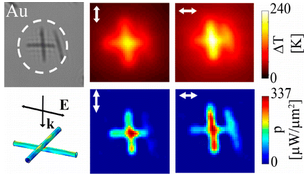 In this article, we present a comprehensive investigation of the photothermal properties of plasmonic nanowire networks. We measure the local steady state temperature increase, heat source density and absorption in Ag, Au and Ni metallic nanowire networks under optical illumination. This allows direct experimental confirmation of increased heat generation at the junction between two metallic nanowires, and stacking dependent absorption of polarized light. Due to co-operative thermal effects, the local temperature distribution in a network is shown to be completely delocalized on a micrometer scale, despite the nanoscale features in the heat source density. The steady state temperature rise is shown to scale linearly with the illumination diameter, allowing calibration of the local temperature field. The total illumination area is thus identified as an important parameter controlling local temperature rise, often not considered in thermoplasmonic experiments. Comparison of the experimental temperature profile with numerical simulation allows an upper limit for the effective thermal conductivity of an Ag nanowire network to be established at 43 Wm-1K-1 (0.1 bulk).
2014
 |
29.-
A critique of methods for temperature imaging in single cells G. Baffou,* H. Rigneault, D. Marguet, L. Jullien Nature Methods 11, 899-901 (2014) ☆ Highlighted in The Scientist ☆ Highlighted in ACS Central Science |
 |
28.-
Time-harmonic optical heating of plasmonic nanoparticles P. Berto, M. S. A. Mohamed, H. Rigneault, G. Baffou* Physical Review B 90, 035439 (2014) |
 |
27.-
Deterministic Temperature Shaping using Plasmonic Nanoparticle Assemblies G. Baffou*, E. Bermúdez Ureña, P. Berto, S. Monneret, R. Quidant and H. Rigneault Nanoscale 6, 8984-8989 (2014) |
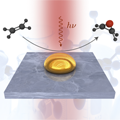
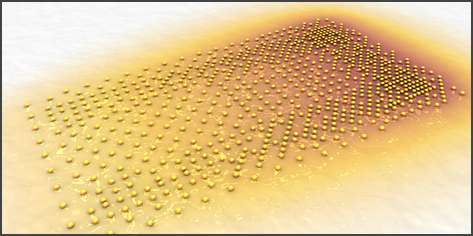 We introduce a deterministic procedure, named TSUNA for Temperature Shaping Using Nanoparticle Assemblies, aimed at generating arbitrary temperature distributions on the microscale. The strategy consists in (i) using an inversion algorithm to determine the exact heat source density necessary to create a desired temperature distribution and (ii) reproducing experimentally this calculated heat source density using smart assemblies of lithographic metal nanoparticles under illumination at their plasmonic resonance wavelength. The feasibility of this approach was demonstrated experimentally by thermal microscopy based on wavefront sensing.
 |
26.-
Nanoplasmonics for Chemistry G. Baffou and R. Quidant* Chemical Society Reviews 43, 3898-3907 (2014) ☆ Highlighted in ChemInform |
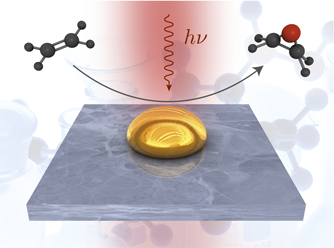 Noble metal nanoparticles supporting plasmonic resonances behave as efficient nanosources of light, heat and energetic electrons. Owing to these properties, they offer a unique playground to trigger chemical reactions on the nanoscale. In this tutorial review, we discuss how nanoplasmonics can benefit chemistry and review the most recent developments along this new and fast growing field of research.
 |
25.-
Super-Heating and Micro-Bubble Generation around Plasmonic Nanoparticles under cw Illumination G. Baffou,* J. Polleux, H. Rigneault, S. Monneret Journal Physical Chemisty C 118, 4890 (2014) ☆ Journal cover ☆ Artwork selected for the front page J Phys Chem Twitter account. ☆ Artwork selected for the cover of J Phys Chem A issue of Nov 2015. |
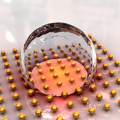
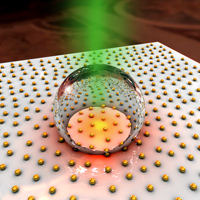 Under illumination, metal nanoparticles can turn into ideal nanosources of heat due to enhanced light absorption at the plasmonic resonance wavelength. In this article, we aim at providing a comprehensive description of the generation of micro-bubbles in a liquid occurring around plasmonic nanoparticles under continuous illumination. We focus on a common situation where the nanoparticles are located on a solid substrate and immersed in water. Experimentally, we evidenced a series of singular phenomena: (i) the bubble life-time after heating can reach several minutes, (ii) the bubbles are not made of water steam but of air and (iii) the local temperature required to trigger bubble generation is much larger than 100°C: This last observation evidences that superheated liquid water, up to 220°C, is easy to achieve in plasmonics, under ambient pressure conditions and even over arbitrary large areas. This could lead to new chemical synthesis approaches in solvothermal chemistry.
2013
 |
24.-
Photo-induced heating of nanoparticle arrays G. Baffou,* P. Berto, E. Bermúdez Ureña, R. Quidant, S. Monneret, J. Polleux, H. Rigneault ACS Nano 7, 6478-6488 (2013) ☆ Journal cover |
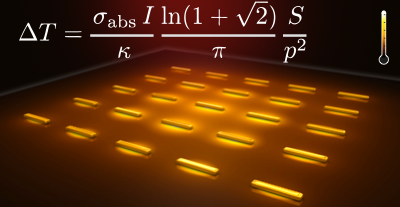 The temperature distribution throughout arrays of illuminated metal nanoparticles is investigated numerically and experimentally. The two cases of continuous and fs-pulsed illumination are addressed. In the case of continuous illumination, two distinct regimes are evidenced: a temperature confinement regime - where the temperature increase remains confined at the vicinity of each nanosource of heat - and a temperature delocalization regime - where the temperature is uniform throughout the whole nanoparticle assembly despite of their nanometric size. We show that the occurrence of one regime or another simply depends on the geometry of the nanoparticle distribution. In particular, we derived simple expressions of i) dimensionless parameters aimed at predicting the degree of temperature confinement and ii) analytical expressions aimed at estimating the actual temperature increase at the centre of an assembly of nanoparticles under illumination, preventing heavy numerical simulations. All these theoretical results are supported by experimental measurements of the temperature distribution on regular arrays of gold nanoparticles under illumination. In the case of fs-pulsed illumination, we explain what are the two conditions that must be fulfilled to observe a further enhanced temperature spatial confinement.
 |
23.-
Three-dimensional temperature imaging around a gold microwire P. Bon, N. Belaid, D. Lagrange, C. Bergaud, H. Rigneault, S. Monneret, G. Baffou* Applied Physics Letters 102, 244103 (2013) |
 |
22.-
Thermo-plasmonics: using metallic nanostructures as nano-sources of heat G. Baffou,* R. Quidant* Laser and Photonics Reviews 7, 171-187 (2013) ☆ Highlighted in Laser & Photon. Rev. as the 3rd most cited article published in 2013 |
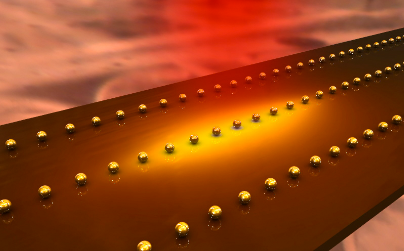 Recent years have seen a growing interest in using metal nanostructures to control temperature on the nanoscale. Under illumination at its plasmonic resonance, a metal nanoparticle features enhanced light absorption turning it into an ideal nano-source of heat, remotely controllable by light. Such a powerful and flexible photothermal scheme is the basis of Thermo-plasmonics. Here, the recent progress of this emerging and fast-growing field is reviewed. First, the physics of heat generation in metal nanoparticles is described, both under continuous or pulsed illumination. A second part is dedicated to numerical and experimental methods that have been developed to further understand and engineer plasmonic-assisted heating processes on the nanoscale. Finally, some of the most recent applications based on the heat generated by gold nanoparticles are surveyed, namely photothermal cancer therapy, nano-surgery, drug delivery, photothermal imaging, protein tracking, photoacoustic imaging, nano-chemistry and optofluidics.
2012
 |
21.-
Quantitative absorption spectroscopy of nano-objects P. Berto,* E. Bermúdes Ureña, P. Bon, R. Quidant, H. Rigneault, G. Baffou* Physical Review B 86, 165417 (2012) |
 |
20.-
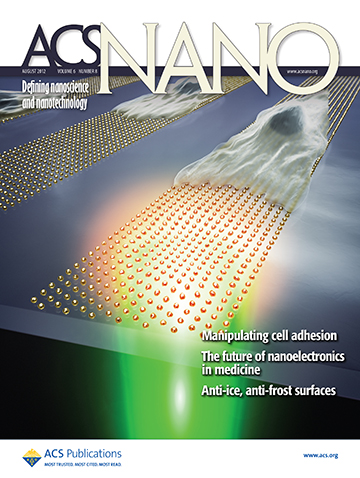
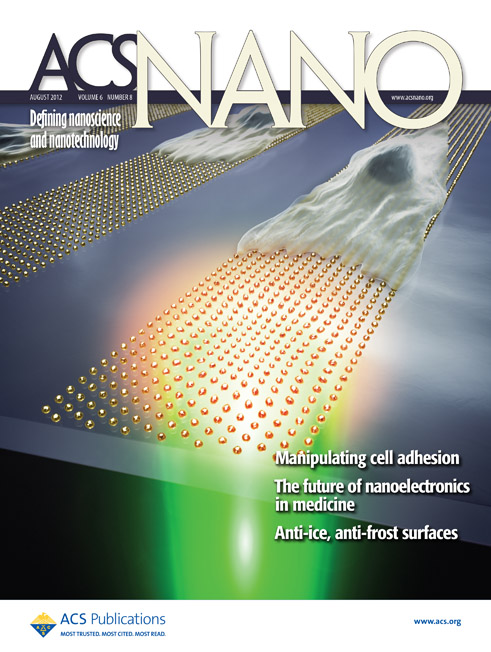
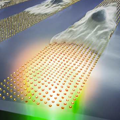
Micropatterning Thermoplasmonic Gold Nanoarrays to Manipulate Cell Adhesion M. Zhu, G. Baffou, N. Meyerbröker, and J. Polleux* ACS Nano 6, 7227-7233 (2012) ☆ Journal cover |
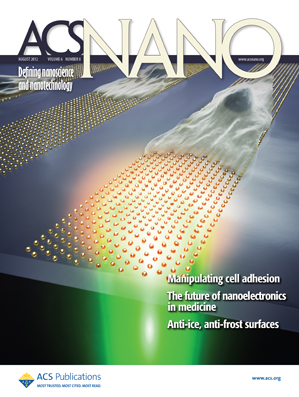 The ability to reversibly control the interactions between the extracellular matrix (ECM) and cell surface receptors such as integrins would allow one to investigate reciprocal signaling circuits between cells and their surrounding environment. Engineering microstructured culture substrates functionalized with switchable molecules remains the most adopted strategy to manipulate surface adhesive properties, although these systems exhibit limited reversibility and require sophisticated preparation procedures. Here, we report a straightforward protocol to fabricate biofunctionalized micropatterned gold nanoarrays that favor one-dimensional cell migration and function as plasmonic nanostoves to physically block and orient the formation of new adhesion sites. Being reversible and not restricted spatiotemporally, thermoplasmonic approaches will open new opportunities to further study the complex connections between ECM and cells.
 |
19.-
Mapping intracellular temperature using Green Fluorescent Protein J. Donner, S. Thompson, M. Kreuzer, G. Baffou, R. Quidant* Nanoletters 12, 2107-2111 (2012) ☆ Highlighted in Nature Photonics ☆ Highlighted in Nanowek |
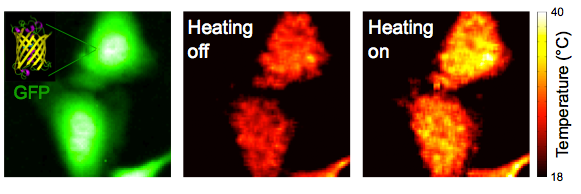 Heat is of fundamental importance in many cellular processes such as cell metabolism, cell division and gene expression. Accurate and non-invasive monitoring of temperature changes in individual cells could thus help clarify intricate cellular processes and develop new applications in biology and medicine. Here we report the use of green fluorescent proteins (GFPs) as a thermal nanoprobes suited for intracellular temperature mapping. Temperature probing is achieved by monitoring the fluorescence polarization anisotropy of GFP. The method is tested on GFP-transfected HeLa and U-87 MG cancer cell lines where we monitored the heat delivery by photothermal heating of gold nanorods surrounding the cells. A spatial resolution of 300 nm and a temperature accuracy of about 0.4°C are achieved. Benefiting from its full compatibility with widely used GFP-transfected cells, this approach provides a non-invasive tool for fundamental and applied research in areas ranging from molecular biology to therapeutic and diagnostic studies.
 |
18.-
Plasmonic Nanoparticle Networks for Light and Heat Concentration A. Sanchot, G. Baffou, R. Marty, A. Arbouet, R. Quidant*, C. Girard, E. Dujardin* ACS Nano 6, 3434-3440 (2012) |
 |
17.-
Thermal Imaging of Nanostructures by Quantitative Optical Phase Analysis G. Baffou,* P. Bon, J. Savatier, J. Polleux, M. Zhu, M. Merlin, H. Rigneault and S. Monneret ACS Nano 6, 2452-2458 (2012) |
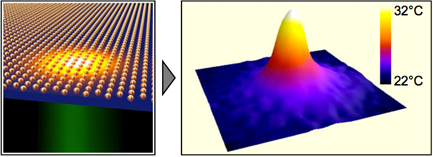 We introduce an optical microscopy technique aiming at characterizing the heat generation arising from nanostructures, in a comprehensive and quantitative manner. Namely, it permits to i) map the temperature distribution around the source of heat, ii) map the heat power density delivered by the source and iii) retrieve its absorption cross section in the case of a light-absorbing structure. The technique is based on the measure of the thermal-induced refractive index variation of the medium surrounding the source of heat. The measurement is achieved using an association of a regular CCD camera along with a modified Hartmann diffraction grating. Such a simple association makes this technique straightforward to implement on any conventional microscope with its native broadband illumination conditions. We exemplify this technique on gold nanoparticles illuminated at their plasmonic resonance. The spatial resolution of this technique is diffraction limited and temperature variations weaker than 1 K can be detected.
2011
 |
16.-
Plasmon-assisted optofluidics J. S. Donner, G. Baffou,* D. McCloskey, R. Quidant* ACS Nano 5, 5457 (2011) |
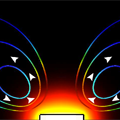
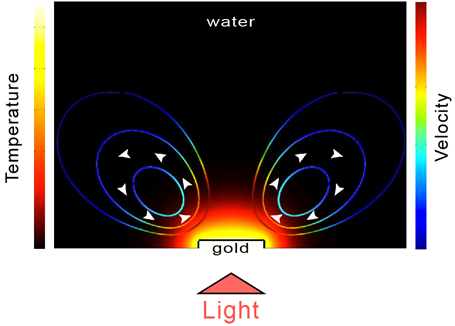 We study the ability of a plasmonic structure under illumination to release heat and induce fluid convection at the nanoscale. We first introduce the unified formalism associated to this multidisciplinary problem combining optics, thermodynamics and hydrodynamics. On this basis, numerical simulations were performed to compute the temperature field and velocity field evolutions of the surrounding fluid for a gold disk on glass while illuminated at its plasmon resonance. We show that the velocity amplitude of the surrounding fluid has a linear dependence on the structure temperature and a quadratic dependence on the structure size (for a given temperature). The fluid velocity remains negligible for single nanometer-sized plasmonic structures (<1 nm/s) due to very low Reynolds number. However thermal-induced fluid convection can play a significant role when considering either micrometer-size structures or an assembly of nanostructures.
 |
15.-
Femtosecond-pulsed optical heating of gold nanoparticles
G. Baffou,* H. Rigneault Physical Review B 84, 035415 (2011) |
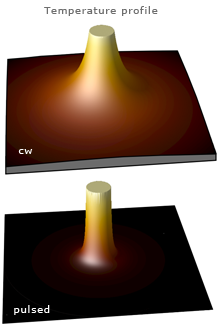 We investigate theoretically and numerically the thermodynamics of gold nanoparticles immersed in water and illuminated by a femtosecond-pulsed laser at their plasmonic resonance. The spatio-temporal evolution of the temperature profile inside and outside is computed using a numerical framework based on a Runge-Kutta algorithm of the fourth order. The aim is to provide a comprehensive description of the physics of heat release of plasmonic nanoparticles under pulsed illumination, along with a simple and powerful numerical algorithm. In particular, we investigate the amplitude of the initial instantaneous temperature increase, the physical differences between pulsed and cw illuminations, the time scales governing the heat release into the surroundings, the spatial extension of the temperature distribution in the surrounding medium, the influence of a finite thermal conductivity of the gold/water interface, the influence of the pulse repetition rate of the laser, the validity of the uniform temperature approximation in the metal nanoparticle, and the optimum nanoparticle size (around 40nm) to achieve maximum temperature increase.
2010
 |
14.-
Thermoplasmonics modeling: A Green function approach G. Baffou,* R. Quidant, C. Girard Physical Review B 82, 165424 (2010) ☆ Highlighted in the Virtual Journal of Science and Technology |
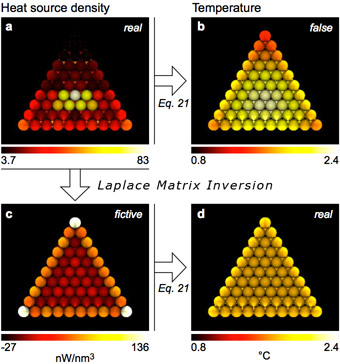 We extend the Discrete Dipole Approximation (DDA) and the Green Dyadic Tensor (GDT) methods - previously dedicated to all-optical simulations - to investigate the thermodynamics of illuminated plasmonic nanostructures. This extension is based on the use of the thermal Green function and a new algorithm that we named Laplace Matrix Inversion. It allows for the computation of the steady-state temperature distribution throughout plasmonic systems. This hybrid photo-thermal numerical method is suited to investigate arbitrarily complex structures, can take into account the presence of a dielectric planar substrate and is simple to implement in any DDA or GDT code. Using this new numerical framework, different applications are discussed such as thermal collective effects in nanoparticles assembly, the influence of a substrate on the temperature distribution and the heat generation in a plasmonic nano-antenna. This numerical approach appears particularly suited for new applications in physics, chemistry and biology such as plasmon-induced nano-chemistry and catalysis, nano-fluidics, photo-thermal cancer therapy or phase-transition control at the nanoscale.
 |
13.-
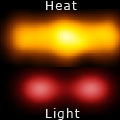
Mapping heat origin in plasmonic structures G. Baffou,* C. Girard, R. Quidant* Physical Review Letters 104, 136805 (2010) |
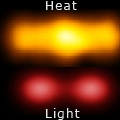 We investigate the physics of photo-induced heat generation in plasmonic structures by using a novel thermal microscopy technique based on molecular fluorescence polarization anisotropy. This technique enables to image the heat source distribution in light-absorbing systems like plasmonic nanostructures. While the temperature distribution in plasmonic nanostructures is always fairly uniform because of the fast thermal diffusion in metals, we show that the heat source density is much more contrasted. Unexpectedly the heat origin (thermal hot spots) usually does not correspond to the optical hot spots of the plasmon mode. Numerical simulations based on the Green dyadic method confirm our observations and enable us to derive the general physical rules governing heat generation in plasmonic structures.
 |
12.-
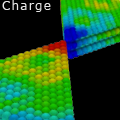
Charge distribution induced inside complex plasmonic nanoparticles R. Marty, G. Baffou, A. Arbouet, C. Girard*, R. Quidant Optics Express 18, 3035 (2010) |
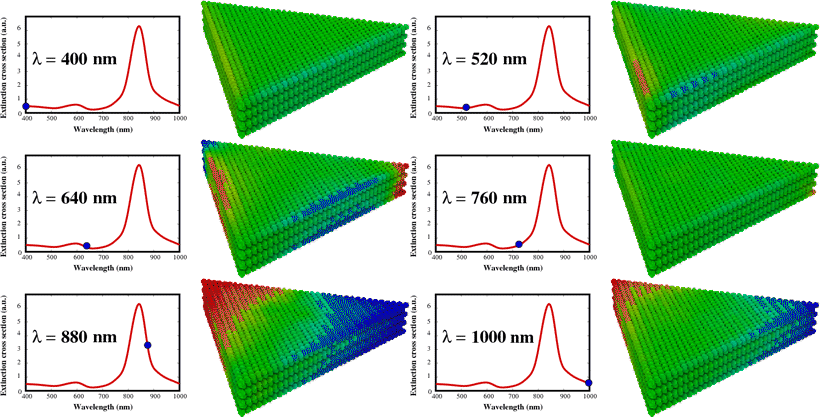 We developed a versatile numerical technique to compute the three-dimensional charge distribution inside plasmonic nanoparticles. This method can be easily applied to investigate the charge distribution inside arbitrarily complex plasmonic nanostructures and to identify the nature of the multipolar plasmon modes involved at plasmonic resonances. Its ability to unravel the physical origin of plasmonic spectral features is demonstrated in the case of a single gold nanotriangle and of a gold nano-antenna. Finally, we show how the volume charge distribution can be used to define and compute the first terms of the multipolar expansion.
 |
11.-
Nanoscale control of optical heating in complex plasmonic systems G. Baffou, R. Quidant, F. J. García de Abajo* ACS Nano 4, 709 (2010) ☆ Selected for the Virtual Issue on Plasmonics in ACS Nano |
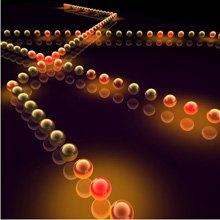 We introduce a numerical technique to investigate the temperature distribution in arbitrarily
complex plasmonic systems subject to external illumination. We perform both electromagnetic
and thermodynamic calculations based upon a time-effcient boundary element method. Two
kinds of plasmonic systems are investigated in order to illustrate the potential of such a technique.
First, we focus on individual particles with various morphologies. In analogy with electrostatics, we
introduce the concept of thermal capacitance. This geometry-dependent quantity allows us to assess
the temperature increase inside a plasmonic particle from the solely knowledge of its absorption
cross section. We present universal thermal-capacitance curves for ellipsoids, rods, disks, and rings.
Additionally, we investigate assemblies of nanoparticles in close proximity and show that, despite
its diffusive nature, the temperature distribution can be made highly non-uniform even at the
nanoscale using plasmonic systems. A significant degree of nanoscale control over the individual
temperatures of neighboring particles is demonstrated, depending on the external light wavelength
and direction of incidence. We illustrate this concept with simulations of gold sphere dimers and
chains in water. Our work opens new possibilities for selectively controlling processes such as local
melting for dynamic patterning of textured materials, chemical and metabolic thermal activation,
and heat delivery for producing mechanical motion with spatial precision in the nanoscale.
We introduce a numerical technique to investigate the temperature distribution in arbitrarily
complex plasmonic systems subject to external illumination. We perform both electromagnetic
and thermodynamic calculations based upon a time-effcient boundary element method. Two
kinds of plasmonic systems are investigated in order to illustrate the potential of such a technique.
First, we focus on individual particles with various morphologies. In analogy with electrostatics, we
introduce the concept of thermal capacitance. This geometry-dependent quantity allows us to assess
the temperature increase inside a plasmonic particle from the solely knowledge of its absorption
cross section. We present universal thermal-capacitance curves for ellipsoids, rods, disks, and rings.
Additionally, we investigate assemblies of nanoparticles in close proximity and show that, despite
its diffusive nature, the temperature distribution can be made highly non-uniform even at the
nanoscale using plasmonic systems. A significant degree of nanoscale control over the individual
temperatures of neighboring particles is demonstrated, depending on the external light wavelength
and direction of incidence. We illustrate this concept with simulations of gold sphere dimers and
chains in water. Our work opens new possibilities for selectively controlling processes such as local
melting for dynamic patterning of textured materials, chemical and metabolic thermal activation,
and heat delivery for producing mechanical motion with spatial precision in the nanoscale.2009
 |
10.-
Heat generation in plasmonic nanostructures: Influence of morphology G. Baffou,* R. Quidant, C. Girard Applied Physics Letters 94, 153109 (2009) |
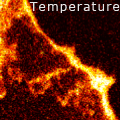
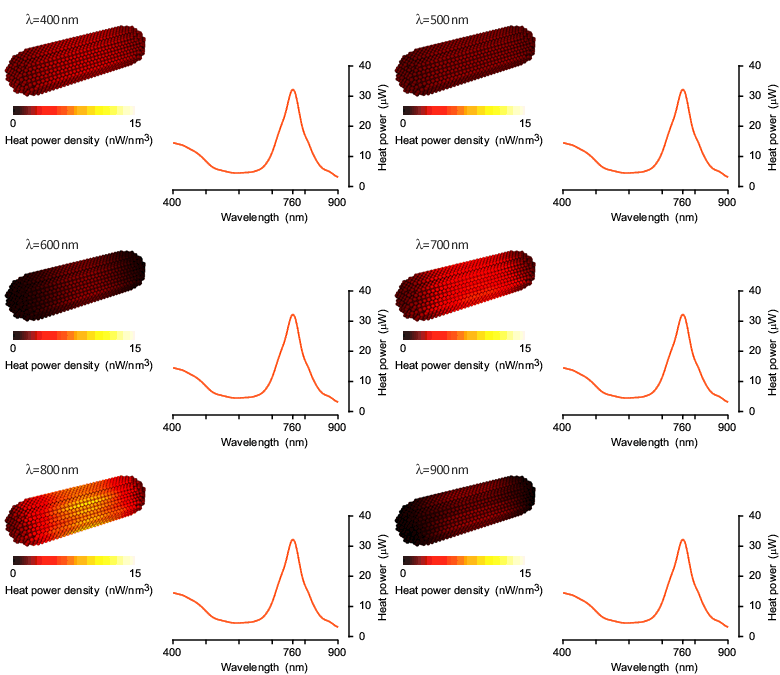 Using the Green's dyadic method, we investigated numerically the heat generation in gold nanoparticles when illuminated at their plasmonic resonance. Two kinds of structures are discussed (colloidal-like nanoparticles and lithographic planar nanostructures) putting special emphasis on the influence of the object's morphology at a constant metal volume. The mechanism
of heating is explained and discussed by mapping the heating power density inside the structures. This work aims at giving an intuitive and original understanding of the relative heating efficiency of a wide set of morphologies and could stand for a basis recipe to design optimized plasmonic nanoheaters.
Using the Green's dyadic method, we investigated numerically the heat generation in gold nanoparticles when illuminated at their plasmonic resonance. Two kinds of structures are discussed (colloidal-like nanoparticles and lithographic planar nanostructures) putting special emphasis on the influence of the object's morphology at a constant metal volume. The mechanism
of heating is explained and discussed by mapping the heating power density inside the structures. This work aims at giving an intuitive and original understanding of the relative heating efficiency of a wide set of morphologies and could stand for a basis recipe to design optimized plasmonic nanoheaters.
 |
9.-
Temperature mapping around plasmonic nanostructures using fluorescence polarization anisotropy G. Baffou,* M. P. Kreuzer, F. Kulzer, R. Quidant* Optics Express 17, 3291 (2009) ☆ Highlighted in Laser Focus World ☆ Highlighted in Optics & Photonics Focus ☆ Selected for publication in the Virtual Journal for Biomedical Optics (VJBO) |
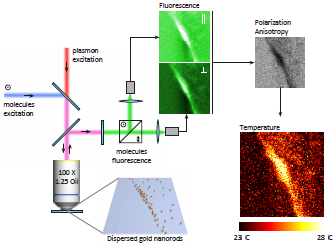 We report on a thermal imaging technique based on fluorescence polarization anisotropy measurements, which enables mapping the local temperature near nanometer-sized heat sources with 300 nm spatial resolution and a typical accuracy of 0.1°C. The principle is demonstrated by mapping the temperature landscape around plasmonic nano-structures heated by near-infrared light. By assessing directly the molecules' Brownian dynamics, it is shown that fluorescence polarization anisotropy is a robust and reliable method which overcomes the limitations of previous thermal imaging techniques. It opens new perspectives in medicine, nanoelectronics and nanofluidics where a control of temperature of a few degrees at the nanoscale is required.
 |
8.-
SiC(0001)3x3 heterochirality revealed by single molecule STM imaging G. Baffou,* A. J. Mayne, G. Comtet, G. Dujardin, L. Stauffer, P. Sonnet Journal of the American Chemical Society 131, 3210 (2009) |
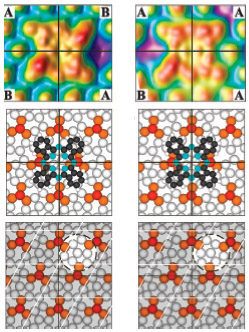 We report a description of the SiC(0001)3x3 silicon carbide reconstruction based on single molecule scanning tunneling microscopy (STM) observations and density functional theory calculations. We show that the SiC(0001)3x3 reconstruction can be described as contiguous domains of right and left chirality distributed at the nanoscale, which breaks the to date supposed translational invariance of the surface. While this surface heterochirality remains invisible in STM topographies of clean surfaces, individual metal-free phthalocyanine molecules chemisorbed on the surface act as molecular lenses to reveal the surface chirality in the STM topographies. This original method exemplifies the ability of STM to probe
atomic-scale structures in detail and provides a more complete vision of a frequently studied SiC reconstruction.
We report a description of the SiC(0001)3x3 silicon carbide reconstruction based on single molecule scanning tunneling microscopy (STM) observations and density functional theory calculations. We show that the SiC(0001)3x3 reconstruction can be described as contiguous domains of right and left chirality distributed at the nanoscale, which breaks the to date supposed translational invariance of the surface. While this surface heterochirality remains invisible in STM topographies of clean surfaces, individual metal-free phthalocyanine molecules chemisorbed on the surface act as molecular lenses to reveal the surface chirality in the STM topographies. This original method exemplifies the ability of STM to probe
atomic-scale structures in detail and provides a more complete vision of a frequently studied SiC reconstruction.2008
 |
7.-
Shaping and manipulation of light fields with bottom-up plasmonic structures C. Girard,* E. Dujardin, G. Baffou, R. Quidant New Journal of Physics 10, 105016 (2008) |
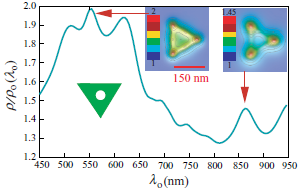 A new interdisciplinary topic which aims at self-assembling, interconnecting and characterizing resonant metallic nanostructures able to funnel, confine, and propagate light energy from a conventional laser source to a single molecular entity is currently emerging in different laboratories. With this technique, several orders of magnitude in the miniaturization scale of optical devices, spanning from tens of micrometres down to the molecular scale, can be expected. With the main objective of overcoming the current limitations of an exclusive top-down approach to plasmonics, we present in this paper some recent experimental and theoretical results about plasmonic structures made by self-assembling or surface deposition of colloidal metallic particles. More specifically, the interest of these objects for tailoring original near-field optical properties will be exposed (near-field optical confinement, local density
of electromagnetic state squeezing, etc). In particular, it is shown that a bottomup approach is not only able to produce interesting nanoscale building blocks but also able to easily produce complex superstructures that would be difficult to achieve by other means.
A new interdisciplinary topic which aims at self-assembling, interconnecting and characterizing resonant metallic nanostructures able to funnel, confine, and propagate light energy from a conventional laser source to a single molecular entity is currently emerging in different laboratories. With this technique, several orders of magnitude in the miniaturization scale of optical devices, spanning from tens of micrometres down to the molecular scale, can be expected. With the main objective of overcoming the current limitations of an exclusive top-down approach to plasmonics, we present in this paper some recent experimental and theoretical results about plasmonic structures made by self-assembling or surface deposition of colloidal metallic particles. More specifically, the interest of these objects for tailoring original near-field optical properties will be exposed (near-field optical confinement, local density
of electromagnetic state squeezing, etc). In particular, it is shown that a bottomup approach is not only able to produce interesting nanoscale building blocks but also able to easily produce complex superstructures that would be difficult to achieve by other means.
 |
6.-
Topology and electron scattering properties of the electronic interfaces in epitaxial graphene probed by resonant tunneling spectroscopy H. Yang, G. Baffou, A.J. Mayne, G. Comtet, G. Dujardin, Y. Kuk Physical Review B 78, 041408(R) (2008) |
 Z-V scanning tunneling spectroscopy is used to probe the topology and electron scattering properties of the electronic interfaces of monolayer and bilayer graphenes, expitaxially grown on SiC(0001). The dZ/dV spectra validate existing calculations of the interface topology and provide evidence for new electron scattering properties due to changes in the electronic character of the bonding. Two sharp boundaries are observed: between the vacuum and the graphene pi state lying above the graphene atom plane and a subsurface barrier between the carbon-rich layer and the bulk SiC.
 |
5.-
State selective electron transport through electronic surface states of 6H-SiC(0001)-3x3 G. Baffou, A.J. Mayne, G. Comtet, G. Dujardin Physical Review B 77, 165320 (2008) |
 We investigate charge transport through electronic surface states of the 6H-SiC(0001)-3×3 surface. Three intrinsic surface states are located within the wide bulk band gap, in which two (S1 and U1) arise from strongly correlated electronic states and the third (S2) has negligible electron correlation effects. Combined conductance and luminescence experiments with the scanning tunneling microscope show that the Mott-Hubbard surface states (S1 and U1) have a high resistance (1.0 GΩ), while the noncorrelated state (S2) has a negligible resistance. Consequently, current can be selectively transported through any of these three surface states.
 |
4.-
Molecular quenching and relaxation in a plasmonic tunable system G. Baffou, C. Girard, E. Dujardin, G. Colas des Francs, O. J. F. Martin Physical Review B 77, 121101(R) (2008) |
 Molecular fluorescence decay is significantly modified when the emitting molecule is located near a plasmonic structure. When the lateral sizes of such structures are reduced to nanometer-scale cross sections, they can be used to accurately control and amplify the emission rate. In this Rapid Communication, we extend Green's dyadic method to quantitatively investigate both radiative and nonradiative decay channels experienced by a single fluorescent molecule confined in an adjustable dielectric-metal nanogap. The technique produces data in excellent agreement with current experimental work.
2007
 |
3.-
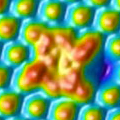
Anchoring of phthalocyanine molecules on a 6H-SiC(0001)3x3 surface G. Baffou,* A.J. Mayne, G. Comtet, G. Dujardin, Ph. Sonnet, L. Stauffer Applied Physics Letters 91, 073101 (2007) |
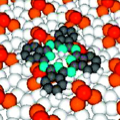
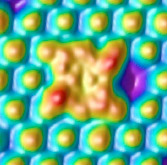 The adsorption of individual metal-free phthalocyanine molecules on the 6H-SiC(0001)3×3 surface was studied using the scanning tunneling microscope supported by density functional theory calculations. Phthalocyanine molecules were found to be chemisorbed through a reaction of two conjugated imide groups with two silicon adatoms. This type of anchoring opens numerous perspectives for the organic functionalization of a biocompatible wide band gap semiconductor.
2005
 |
2.-
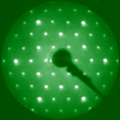
Scanning tunnelling microscopy imaging and spectroscopy of p-type degenerate 4H-SiC(0001) A. Laikhtman, G. Baffou, A.J. Mayne, G. Dujardin* Journal of Physics: Condensed Matter 17, 4015 (2005) |
 In this work we present scanning tunnelling microscopy (STM) imaging and spectroscopy of a highly p-doped wide bandgap semiconducting 4H-SiC(0001) surface. Whereas n- and p-doped 6H-SiC or n-doped 4H-SiC surfaces can be relatively easily imaged with the STM, the p-doped 4H-SiC cannot be imaged due to the absence of any surface conductivity. This is very surprising given the presence of a p-doped, degenerate epitaxial layer. The behaviour can be explained by the formation of a Schottky barrier either between the tip and the surface or between the surface and the sample holder, depending on the polarity of the applied voltage. We found that prolonged and repeated exposures of the SiC surface to a Si atomic flux followed by thermal annealing are required before the surface conductivity is sufficient to allow STM images to be recorded. The result is the deposition of overlayers of Si, with structures similar to Si(111)7×7, Si(113)3×2, and Si(110)16×2 rather than the expected stable SiC(0001)3×3 reconstruction. We have further demonstrated the ability of scanning tunnelling spectroscopy to distinguish between the Si and the SiC phases based on the difference in their bandgaps.
2004
 |
1.-
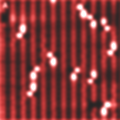
Chemisorbed bistable molecule: Biphenyl on Si(100)2x1 A.J. Mayne, M.Lastapis, G. Baffou, L. Soukiassian, G. Comtet, L. Hellner, G. Dujardin* Physical Review B 69, 045409 (2004) |
 We have shown that the room-temperature adsorption of the biphenyl molecule on the Si(100) surface gives rise in majority to a bistable molecular configuration. The switching of the bistable molecule is activated at room temperature by thermal activation. By using a combination of room-temperature and low-temperature (30 K) scanning tunneling microscope (STM) topography, room-temperature STM manipulation, and near edge x-ray absorption fine structure spectroscopy, the nature of the bistable molecule, its adsorption geometry, and its interaction with the surface could be identified.